Updated
Enoki
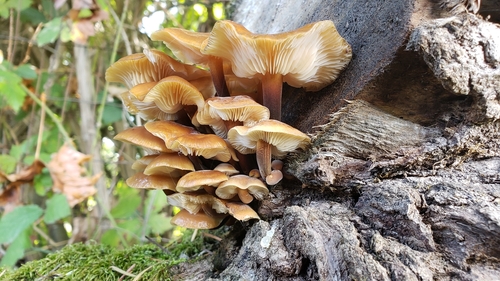
The long white clusters sold in supermarket packets. In the wild it is a brown-capped, cold-weather wood fungus that looks nothing like the cultivated form.
Laboratory work
Nobody has run a trial of it in people that reached a public register, and no randomised trial of it has been indexed. Everything below is laboratory work, where it grows, and what people report.
What it is taken for
One tile per use. The line under each is how far the evidence for that use actually got, counted rather than argued.
What it has been tried for, and how far that has got
One row per use. The label is counted rather than argued — it is set by how many randomised trials and posted results exist for that use, and nothing else. How that is worked out.
| Use | How far it has got | Trials | With a result | Randomised, published | Reviews | Commonly taken for it |
|---|---|---|---|---|---|---|
| Allergy | Laboratory work | 0 | 0 | 0 | 0 | yes |
| Cholesterol and lipids | Laboratory work | 0 | 0 | 0 | 0 | yes |
| Immune function | Laboratory work | 0 | 0 | 0 | 0 | yes |
Commonly taken for immune function, cholesterol and lipids, allergy. The work there is still laboratory and animal work — often a great deal of it — and the step into a trial in people has not been taken yet.
The compounds the research names
Formula and mass from PubChem. Naming a compound is not a claim that it does anything in a person.
C18H32O16
What it looks like in the field
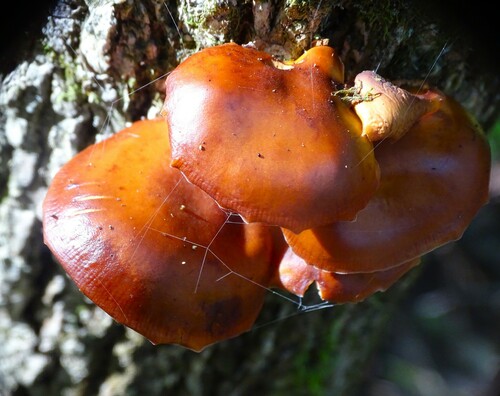
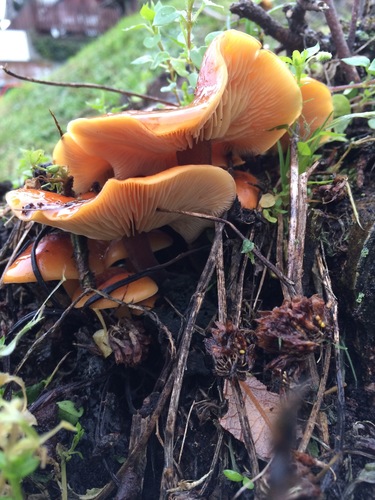
Research-grade observations, each by a different photographer. Every one links to the record it came from.
In the kitchen
Clean, mild, slightly fruity.
Added at the end of hot pot and soup so they keep their snap, or roasted in bundles until the ends crisp. The cultivated white clusters are a different thing to look at from the wild brown-capped form.
Enoki has been the subject of repeated listeria recalls. Cook them rather than eating them raw.
Where it has been recorded, and when it fruits
37,997 verified occurrence records with coordinates, from GBIF. This is where people have recorded it, which follows where recorders live as much as where the fungus grows — read the shape, not the ranking.
| United Kingdom | 8,796 | |
| Sweden | 5,516 | |
| United States | 4,976 | |
| Denmark | 2,550 | |
| Netherlands | 2,226 | |
| Norway | 2,158 | |
| Switzerland | 1,850 | |
| Belgium | 1,724 | |
| New Zealand | 1,484 | |
| Germany | 1,413 | |
| Australia | 1,088 | |
| Canada | 830 |
Most records fall in Jan. Northern-hemisphere recorders dominate the dataset, so a southern population would not show here.
iNaturalist separately holds 9,466 research-grade observations of it.
What has been reported going wrong
2 voluntary reports to the US Food and Drug Administration name a product by this mushroom's name. A report is someone saying something happened after taking something. It is not a finding that the product caused it, the FDA says so itself, and nobody knows how many people took the product without reporting anything.
| Diarrhoea | 2 |
| Abdominal Pain | 1 |
| Emergency Care | 1 |
| Gastrointestinal Disorder | 1 |
| Nausea | 1 |
| Vomiting | 1 |
| Other Serious or Important Medical Event | 2 |
| Visited Emergency Room | 2 |
The newest randomised trials and reviews
Indexed in Europe PMC. Titles and journals only — follow the link to read the paper where the publisher allows it.
| Year | Study | Journal | Kind | Citations |
|---|---|---|---|---|
| 2026 | Biological activities and bioactive constituents of Flammulina velutipes: An updated systematic review open access | J Sci Food Agric | Review or meta-analysis | 0 |
| 2026 | Application of Medicinal Mushrooms for the Treatment of Peripheral Nerve Injury: A Systematic Review open access | Med Sci (Basel) | Review or meta-analysis | 0 |